How Do I Know if My Cat Doesnt Like You

Pets don't typically hate their people — but they tin feel insecurity, fear, shyness, irritation and anxiety.
Those negative feelings manifest in avoiding contact, scratching, bitter and hiding. And all of this can seem like hate, but information technology really isn't.
So, if you experience like your cat hates y'all, you may be reassured to know that this probable isn't the case. Keep reading, and I'll explain why.
Cats Have Dissimilar Personalities
Cat behavior can be tricky to understand, and personalities vary widely from cat to cat.
Some cats enjoy a lot of closeness with humans. They're snugglers or talkers, and they are usually plant laying on a laptop or a desk when their human is trying to get some piece of work done.
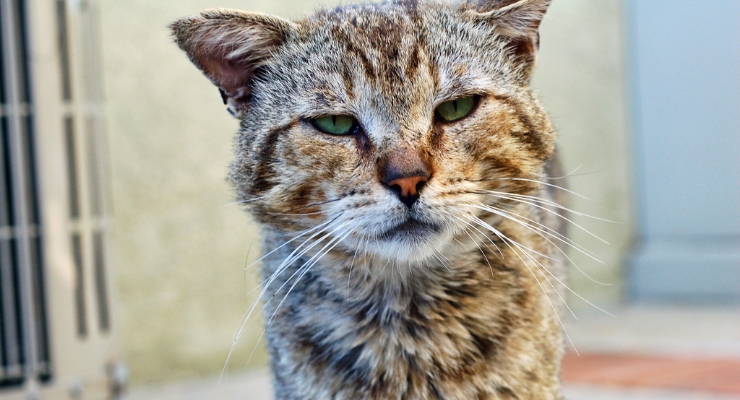
Other cats tend to be more standoffish. Some can even come beyond every bit hateful or aggressive.

Does Your Cat Actually Hate Yous?
Allow me ask you this: What it is about your cat's behavior that is coming across as "mean"?
Practise they bite and scratch you? Wiggle to get downwards when held? Avoid sitting on or near you?
Cats bite, scratch and avoid contact for any number of reasons.
In social club to sympathise these behaviors, you should determine what'due south triggering your true cat to respond the way they do.
Here are a few possible reasons your cat may be upset:
- New pet, child or developed in the household
- Motion to new house
- Recently adopted
- Illness/medical issue
- Major routine alter (for example, you used to stay at home, but at present you have a full-fourth dimension job)
- Closeness forced on a true cat who is uncomfortable with it
- Outdoor cats restricted to indoors
- History of abuse
Let's have a closer await at these situations and how they might affect a true cat's beliefs.

Changes in Routine
When there'south a new person, new pet or new routine in the household, that causes some pregnant changes to the hierarchy and routine.
Cats can become stressed and irritated when new people try to pet them, or when another animal enters their territory. This can cause them to lash out and demonstrate their displeasure with the changes.
Examples of changes in the normal routine that your true cat may hate:
- If you've recently institute a new chore and your hours abroad from habitation have changed, this can trigger undesirable behaviors in your cat.
- New roommates or even visitors can be a source of stress. Someone may accidentally close off a room your true cat is accustomed to sitting in, or shut a door to the room the litter box is in.
- Bringing habitation a new pet may be exciting for y'all, but for the existing pets new additions tin be anything merely. Cats can be territorial and accept been known to guard that territory fiercely. This can translate to hissing, spitting, refusing to let other cats to use a litter box and even outright fighting.
- Lastly in this category — children. Most children do non understand how to properly arroyo or pet an creature.
- And babies? They can be quite confusing to a household routine, and your true cat may react negatively to this as well. Just remember to give your cat as much attention as you can and let them to hide while they larn nigh this new person in their home.
Moving to a New Dwelling
Moving to a new home is stressful for everyone, including your pets. Your cat will demand time to adjust to the new scents, placement of objects and routines.
To help your true cat experience like they have a safe space in all the upheaval, brand sure the litter box stays the same and that your cat has access to familiar toys and beds. Try to keep feeding, medication and treat times the same.
If yous know you're going to take a solar day or two where things are going to be crazy with people going in and out, it'south not a bad idea to have your true cat stay with a friend or be boarded.
Yes, their routine may change and they may withal be stressed, but you won't have to worry about them escaping outdoors or being accidentally trod upon by the movers.
For more than moving advice, encounter "iv Tips for Surviving Moving Mean solar day When You Have a True cat."
Restricted From Going Outdoors
At some point, you lot may decide to transition your outdoor or indoor/outdoor cats to strictly indoors in an try to keep them safer.
The transition menstruum is often fraught with frustration for both true cat and cat parent. Cats previously allowed outdoors will non empathize why they suddenly must stay in and may demonstrate their displeasure in whatever number of ways. You can await to hear a lot of vocalisation, anxiety and perhaps subversive tendencies.
In some cats, these outbursts subside. But other cats will never transition peacefully to indoor restrictions, and you'll accept to decide whether to allow them dorsum outdoors or tolerate their inverse behavior.
Catios, outdoor enclosed areas designed for cats, may offer a compromise for pet parents who want their cats to remain indoors but are going toe-to-toe with a cat who will not have the new limitations.
Prefers More than Personal Space
Some cats merely prefer more personal infinite than others.
My true cat, Harrison, is a perfect example. I adopted him when he was six months old. Now, xv years later, he's lived with me his whole life and gets a lot of attention — simply he'southward never been the type of cat that enjoys a lot of contact. He doesn't like existence held or groomed and has no desire to sit down on anyone's lap.
Harrison shows his affection past wanting to be near me — merely not on me.
If I sit on the couch, he'll sprawl by my feet. If I'chiliad on my bed, he'll be on the floor nearby. He'll occasionally offer a purr as I walk past and allows me to pet him around the ears as much every bit I like.
You may accept a true cat who prefers personal space, but don't mistake this for hate. Look for your cat'due south personal indicators of amore — and don't try to strength information technology.
MSPCA-Angell, an animal protection social club, puts it this way:
"Stroll past a few cat cages at the shelter, you'll notice that some cats meow for special attending, while some others simply lie back and gaze at you with an air of arrogance. In that location are as many dissimilar personalities of cats every bit in that location are cats in the shelter. Which disposition is best for you? You have to decide."
Before adopting a cat, spend some time with them to see if their personality is a match for yours.
For boosted reading, be sure to check out "Your Cat Fits Ane of These 5 Personality Types — Which Ane?"
Forcing Closeness on the True cat
Every bit mentioned, some cats simply don't like to be held — like Harrison. I respect his personal boundaries and preferences, and equally a event, he's a happy cat.
Agreement a cat's boundaries is important considering forcing them to accept closeness and hands-on amore is probable to result in a few bites and scratches and foster mistrust. Not because your cat "hates" yous, but because they're trying to let you lot know where their comfort zone is.
As a pet sitter, I have cats who run the gamut from wanting to stand on my head to preferring me to come in, say hello from beyond the room, put food in the basin and and then get out.
My job is to respect their comfort zone, and whatsoever response from me makes them comfortable is what they get.

Medical Reasons
Co-ordinate to Tufts Academy, "Sudden alterations in your cat's behavior can be indicative of serious medical or psychological bug requiring prompt veterinary attention."
Behavior changes are one of the best indicators of ill health because cats usually try to muffle pain or affliction.
Some behavior changes to sentry for include:
- Suddenly begins toileting exterior the litter box
- Shows a lack of interest in grooming or grooms excessively
- Increases in vocalizations and types of vocalizations
- Manifests concrete symptoms (such every bit limping)
- Has a sudden increase or decrease in weight or eating habits
- Demonstrates social reclusiveness fifty-fifty if commonly a friendly/cuddly true cat
Note any of the above behaviors. And if they continue more than a solar day or so, contact your cat'due south veterinarian.
Check out this video for 10 signs your true cat is stressed:
By History
The sad reality is that hundreds, if not thousands, of animals are in abusive situations right this minute.
Abuse teaches animals that people are not to be trusted, and it tin be difficult to overcome these lessons in a true cat who has been driveling or neglected.
Adopting a true cat? Effort to get as much of a history every bit you can. Some adoptees are strays who were never claimed, and some are ferals who are immature enough to perhaps overcome their fearfulness of people. There's a big difference betwixt the ii.
"A devious cat is a pet who has been lost or abased, is used to contact with people and is tame enough to be adopted," explains The Humane Social club of the United states. "A feral cat is the offspring of stray or other feral cats and is not accustomed to human contact. Feral cats are unremarkably too fearful to be handled or adopted."
With some cats, all it takes is time and patience to win them over. Others will never be comfortable with closeness from their humans, and we volition demand to be content with seeing them thrive afterward a difficult past.
For more than advice, see "Dealing With Traumatized Rescue Cats."
References
[accordion tag=p clicktoclose="true"]
[accordion-item championship="+ Click to encounter the sources for this article."]
- "Biting/Scratching." MSPCA–Angell. https://world wide web.mspca.org/pet_resources/bitingscratching/.
- Landsberg, Gary, Wayne Hunthausen, DVM, and Lowell Ackerman. Beliefs Problems of the Dog and Cat. Elsevier Health Sciences. 2012. https://books.google.com/books?id=eYbVBMkYvSAC&pg=PA329#v=onepage&q&f=false.
- "Feline Behavior Problems: Assailment." Cornell University Higher of Veterinary Medicine. December 2016. https://www.vet.cornell.edu/departments-centers-and-institutes/cornell-feline-health-center/health-information/feline-health-topics/feline-behavior-problems-assailment.
- "Aggression in Cats." American Society for the Prevention of Cruelty to Animals. https://www.aspca.org/pet-care/true cat-care/common-true cat-behavior-issues/aggression-cats.
- "The Top 7 Changes in Cat Behavior." Tufts University Cummings School of Veterinary Medicine. August 2017. https://news.vet.tufts.edu/2017/08/the-top-seven-changes-in-cat-behavior/.
[/accordion-item][/accordion]
Source: https://www.petful.com/behaviors/cat-secretly-hates-you/
0 Response to "How Do I Know if My Cat Doesnt Like You"
Post a Comment